
Australian Drinking Water Guidelines (ADWG) Compliance
– a real concern for the regions
We help the regions address a real concern – achieving Australian Drinking Water Guidelines (ADWG) compliance.
Water Process Design (an accomplished RPEQ Water Engineering Consultancy) and Innovate Wisely™ have joined forces to provide water engineering expertise with trust and governance tools. Our combined services provide a practical, staged roadmap for ADWG compliance and resilience.
What Our Clients Say
“Lee Foster’s, Water Process Design, integrated Innovate Wisely™ into our Drinking Water Quality Strategy to support internal alignment and engagement. The Trust Analyser™ workshops helped us identify key trust and momentum issues early, which informed a stakeholder strategy supporting smoother implementation and better project outcomes.”
Adam Branch, Manager Water & Wastewater, South Burnett Regional Council
Regional councils are being asked to meet evolving drinking water expectations—without metro-scale resources.
Innovate Wisely™ + Water Process Design help councils build a staged, affordable, ADWG-aligned roadmap that strengthens compliance, operational resilience, and community confidence.
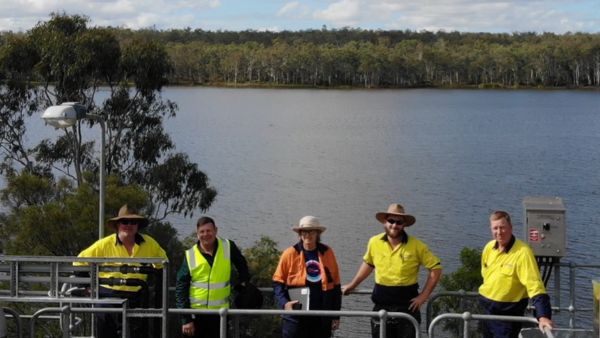
The reality for councils
Regional, remote and rural councils are managing multiple small schemes, variable raw water, ageing assets, and limited operator capacity—while community expectations and regulatory scrutiny continue to rise.
Common pain points we see across councils:
-
Water quality variability driving unstable plant performance (especially during wet season events).
-
Disinfection by-product risk (e.g., THMs) as networks age and organic loads fluctuate.
-
Aesthetic and operational issues (hardness, salinity/TDS, manganese, taste/odour) that escalate complaints and workload.
-
Ageing filtration assets creating variable filter performance and higher maintenance.
-
Network realities: dead-ends, long retention times, residual decay, and reactive incident management.
-
Governance complexity: councillor decision cycles, budget constraints, and competing priorities.
Why “future ADWG readiness” is now a business risk
The Australian Drinking Water Guidelines are deliberately dynamic—updated as evidence evolves and risk profiles change. Councils are expected to demonstrate robust, risk-based management that protects public health and maintains confidence.
Key signals councils should be planning for include:
-
PFAS guidance updates released by NHMRC in June 2025 (with new/revised health-based values and advice). NHMRC+1
-
Updated guidance for manganese (health-based guideline value referenced at 0.1 mg/L) published June 2025. guidelines.nhmrc.gov.au
-
THM management expectations remain clear: total THMs should not exceed 0.25 mg/L, while ensuring disinfection is never compromised. guidelines.nhmrc.gov.au
-
Ongoing guideline updates are tracked and consolidated in the ADWG “table of updates”—a practical indicator that expectations evolve over time. guidelines.nhmrc.gov.au
-
Lead-free plumbing requirements from 1 May 2026 for new plumbing installations conveying drinking water (via NCC/Plumbing Code of Australia), creating new compliance and asset interface considerations “at the tap”. NHMRC
What this means in practice: Councils need a plan that is both technically robust and decision-ready—so compliance risk does not become a recurring operational crisis.
Our integrated offer: engineering + governance + delivery alignment
Most councils don’t need another generic report. They need a program that:
-
converts risk into prioritised investment logic,
-
is explainable to councillors and communities, and
-
is staged to match budget cycles and delivery capacity.
Water Process Design brings
-
End-to-end treatment and network technical assessment
-
Options development and concept design pathways
-
Practical constructability and operability insight for small schemes
Innovate Wisely™ brings
-
Structured decision governance and alignment (so options don’t stall or cycle)
-
Stakeholder workshop facilitation across councillors, operators, and leadership
-
Trust–knowledge–energy diagnostics (where delivery risk shows up early)
-
Roadmap framing that improves ownership, sequencing, and follow-through
Result: a strategy that is not only “ADWG-aligned,” but genuinely implementable.
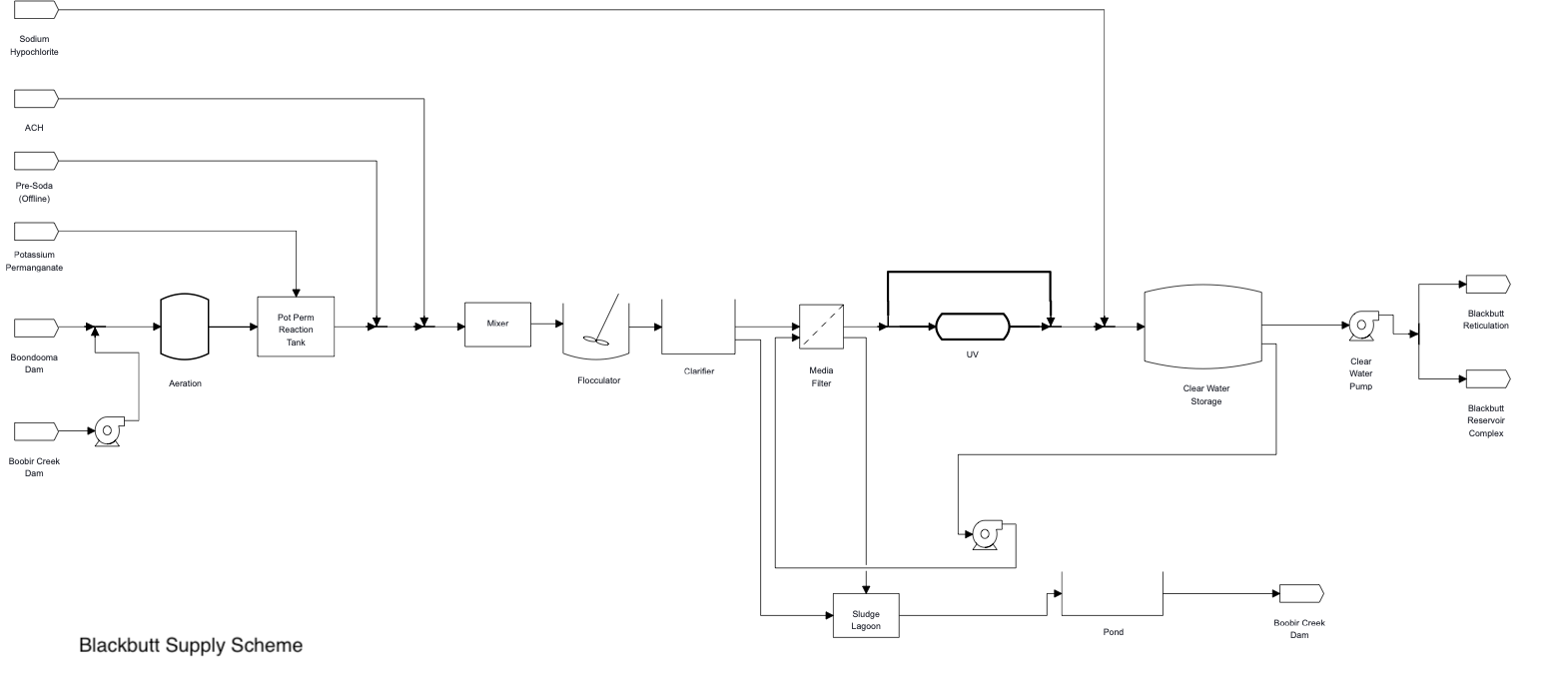
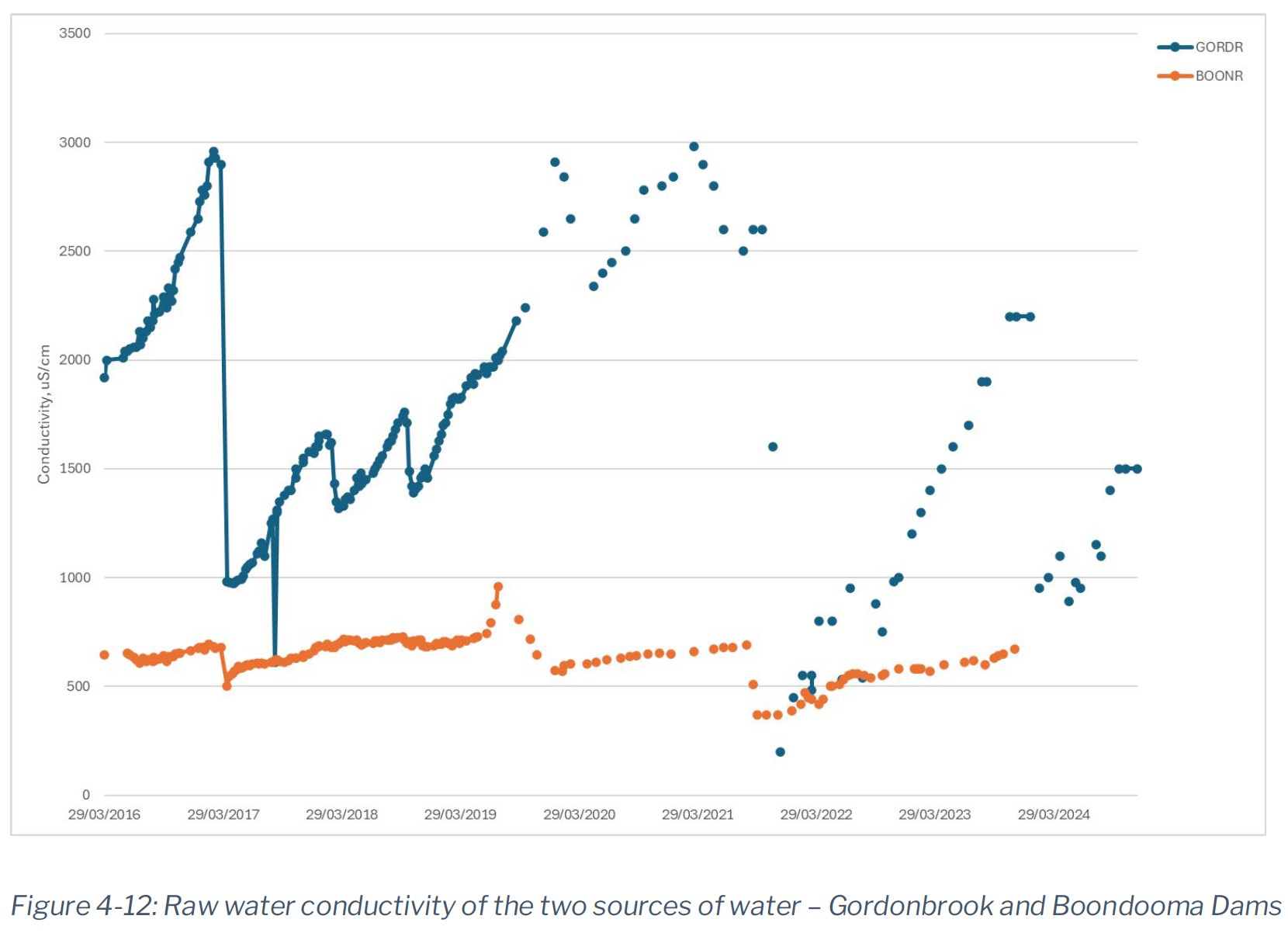
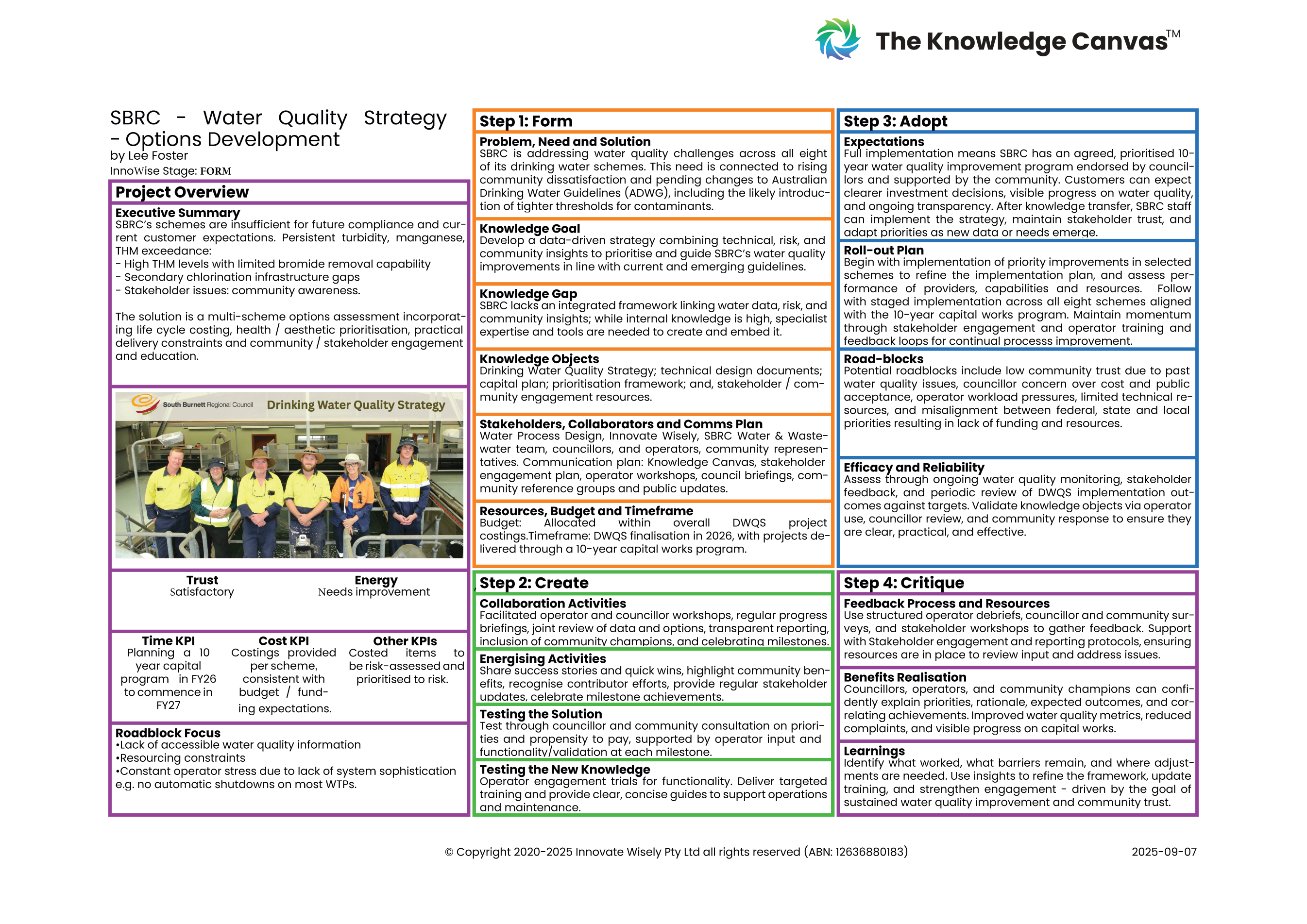
Knowledge Canvas™ – Council Decision Map
-
A shared, structured view of:
-
the problem being solved
-
constraints (technical, financial, regulatory)
-
options considered and rejected
-
assumptions and risks
-
decision ownership and gates.
-
-
Reduces:
-
scope drift
-
re-litigation of past decisions
-
knowledge loss during staff or councillor turnover.
-
-
Becomes a living governance artefact, not a static appendix.
What councils actually receive
Technical, governance and delivery artefacts — not just a report
Engineering & risk foundations (Water Process Design)
-
Scheme-by-scheme drinking water risk profile
(raw water, treatment, distribution, operational constraints) -
Options assessment with clear trade-offs
(compliance risk reduction, constructability, operability, cost) -
Staged capital and operational roadmap
(near, medium, long term aligned to budget cycles)
Decision and delivery enablers (Innovate Wisely™)
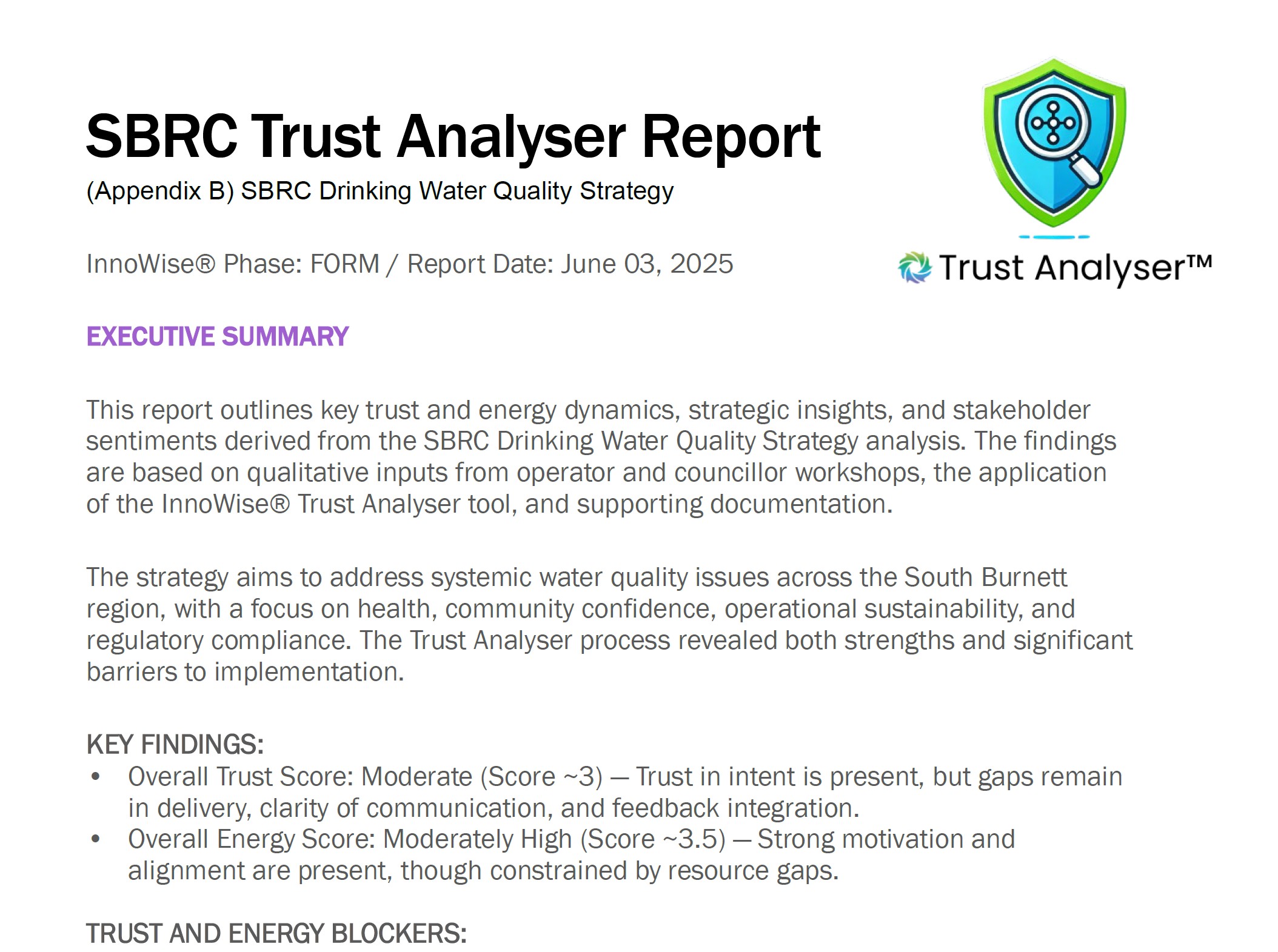
Trust Analyser™ – Trust Impact Report
-
Quantified insight into:
-
decision confidence
-
role clarity
-
delivery alignment.
-
-
Highlights where trust is supporting delivery and where it is silently increasing risk.
-
Provides an evidence base for:
-
councillor briefings
-
executive decisions
-
change sequencing.
-
-
Used to design engagement, governance and staging — not just “measure sentiment”.
What you get (deliverables summary)
-
An integrated strategy that is:
-
technically sound
-
decision-ready
-
implementable with existing capability.
-
-
Improved confidence across:
-
councillors
-
operators
-
executives
-
and the community.
-
-
Reduced likelihood of:
-
stalled projects
-
reactive compliance responses
-
and reputational shocks.
-
-
Scheme-by-scheme risk profile (raw water, treatment, distribution, operational constraints)
-
Options assessment with clear trade-offs (risk reduction, affordability, operability, staging)
-
Staged investment roadmap (near / medium / long term) aligned to budget cycles
-
Governance & engagement framework (who decides what, when, and on what evidence)
-
Operator practicality embedded—so the roadmap matches real capability and constraints
-
Executive-ready story for councillors and community confidence